Food is the fuel of the body. But before it can be of any use, it must be properly processed. The body's food processing plant is the alimentary canal, a muscular tube about 10 m (33ft) long which starts at the mouth and ends at the anus.
from Health and Fitness Articles from EzineArticles.com http://ift.tt/2EpEL73
Wednesday, February 7, 2018

A Sound Mind in a Healthy Body
All of us have heard of the famous saying "Health is Wealth". Good health is a secret of every happy human being. Health can be the greatest wealth in the world. Health is the condition in which an individual becomes sound socially, mentally, emotionally and spiritually. Good health means that your body and mind should function as they are supposed to.
from Health and Fitness Articles from EzineArticles.com http://ift.tt/2slnes3
from Health and Fitness Articles from EzineArticles.com http://ift.tt/2slnes3
Tuesday, February 6, 2018
10 Life Hacks for All
Are you feeling stressed out due to overwork? Have lost your focus on your work? That's what happens when you don't follow a proper healthy schedule and take a burden on yourself by delaying your work.
from Health and Fitness Articles from EzineArticles.com http://ift.tt/2nFMfcu
from Health and Fitness Articles from EzineArticles.com http://ift.tt/2nFMfcu
Monday, February 5, 2018
The Increasing Rate of Suicides
Statistics have shown that there is an increase in the rate of suicides and attempted suicides all over the world. Though the rate seem to indicate that young girls have been noticed to have much to experience in this department-some say the rate has jumped from 11% to 13% from 1999 to 2015-the young men also have a high rate of success in committing suicide. This has been attributed to the fact that boys use more violent means to achieve their aim.
from Health and Fitness Articles from EzineArticles.com http://ift.tt/2BWYlCp
from Health and Fitness Articles from EzineArticles.com http://ift.tt/2BWYlCp
Friday, February 2, 2018
Running Low on These Nutrients Could Trigger a Mood Disorder
Food and your mood

There’s little question that your emotions are influenced by what you eat. “Brain health and our mental health depend on certain key nutrients, like B12 and omega-3 fats,” says clinical psychiatrist Drew Ramsey, MD. “Eating an American/Western diet almost doubles the risk of depression in large research trials, while a more traditional or Mediterranean pattern cuts the risk of clinical depression by 40-50 percent.” Indeed, an article in the Indian Journal of Psychiatry suggests nutrition can play a crucial part in the severity and duration of depression: “Nutritional factors are intertwined with human cognition, behavior, and emotions.” Getting enough of these key nutrients from your diet could prevent you from developing a mood disorder.
Zinc
This important mineral helps your body’s immune system fight viruses and bacteria, according to the National Institutes of Health (NIH) Office of Dietary Supplements. But it also impacts mental health. “Zinc has been used as a treatment for mood disorders, specifically depression and anxiety,” says Torey Armul, a registered dietitian and spokesperson for the Academy of Nutrition and Dietetics. Recommended daily intake is 9 mg for women and 11 mg for men, says Armul, who adds that good sources of zinc include oysters, red meat, poultry, beans, whole grains, and fortified cereals. Also make sure you’re eating these foods proven to put you in a good mood.
Omega-3 fatty acids
Omega-3’s are important to your immune system, endocrine system, lungs, heart, and blood vessels, according to the NIH. In addition, omega-3 fats are linked to improved mood and brain function, Armul points out. “The body can’t make omega-3 fats on its own, so it must get them through diet. Unfortunately, most diets are severely lacking in this healthy fat,” Armul says, adding that women should aim for 1.1 grams per day, and men should try for 1.6. Good sources are salmon, tuna, flaxseeds, chia seeds, walnuts, and canola oil.
Vitamin D
You really need to know the symptoms of vitamin D deficiency, because falling short on this crucial nutrient is hard on your body and mind, potentially contributing to a mood disorder. Research has identified vitamin D receptors on cells in brain regions associated with depression, writes James M. Greenblatt, MD in Psychology Today, adding that studies also suggest the depressive symptoms of seasonal affective disorder (SAD) could be due to dipping levels of vitamin D. He points to various studies supporting the link between mental illness and D deficiency, including research from the Netherlands that found low D levels correlated with depression symptoms in adults. The body makes vitamin D when exposed to sunlight, according to the NIH, but this nutrient could also be consumed through supplements and foods like fatty fish and fortified dairy. The recommended daily amount varies by age, with infants 12 months old and younger needing 400 IU, and adults 19-70 years old needing 600 IU.
Vitamin B

A study in the Journal of Clinical Psychiatry notes that, “Depression, dementia, and mental impairment are often associated with vitamin B12 and folate deficiency, especially in the elderly.” Vitamin B12 is found in lots of foods, including beef liver, clams, fish, poultry, eggs, and dairy products, as well as multivitamins and supplements, says the NIH. Recommended daily amounts vary with age: Infants six months and younger need .4 mcg, while adults need 2.4 mcg. Don’t miss these other vitamins that can help treat depression.
Content continues below ad
Folate
This vitamin could play a big role in the development of a mood disorder, according to an Indian Journal of Psychiatry article. The authors point to findings that patients suffering from depression had blood folate levels an average of 25 percent lower than healthy individuals. “Depressive symptoms are the most common neuropsychiatric manifestation of folate deficiency,” they wrote. Many foods naturally contain folate, including asparagus, Brussels sprouts, dark leafy vegetables, oranges, peanuts, black-eyed peas, kidney beans, whole grains, and fortified cold cereals. Infants six months and younger should get 65 mcg a day, while adults aged 19-70 should aim for 400.
Iodine
The thyroid gland plays a role in many important body functions, like your metabolism, immune response, and brain function. For the thyroid to work properly, it demands iodine, explains Healthy Holistic Living.com. Sources of this nutrient include iodized salt, fish, and dairy products; the NIH recommends adults consume 150 mcg daily.
Proteins
Serotonin, a neurotransmitter, is crucial to mood, which is why it’s a target for many antidepressant medications, says Armul. To make serotonin, you need an amino acid called tryptophan, and you can get that from protein-rich foods such as poultry, nuts, and dairy. Folate-containing foods like leafy greens, beans, and lentils also support serotonin, she adds.
Iron
In some children with attention-deficit/hyperactivity disorder, iron deficiency can play a role, write the authors of the Indian Journal of Psychiatry article. Low iron (anemia) may also be linked to depression. Fortunately, you can get iron from many sources, including foods such as lean meat, poultry, seafood, and fortified cereals, as well as supplements. Adult men aged 19-50 should aim for 8 mg of iron daily, and adult women aged 19-50 need 18 mg.
The big picture
Focusing on individual vitamins and minerals can help, says Armul, but you really need to make sure you’re eating a healthy and complete diet. A 2015 study published in the British Journal of Health Psychology found young adults who ate more fruits and vegetables reported greater well-being, as well as more curiosity and creativity, as opposed to people who ate fewer fruits and veggies. “If you’re hoping to boost your mood with lifestyle habits,” Armul says, “the best approach is to eat more overall fruits and vegetables, reduce your intake of simple carbohydrates, and get more exercise.” For more tips, check out these science-backed ways to overcome depression naturally.
The post Running Low on These Nutrients Could Trigger a Mood Disorder appeared first on Reader's Digest.
from Diet & Weight Loss – Reader's Digest http://ift.tt/2EbNgCu
Adding This Food to Your Breakfast Could Help You Lose Weight
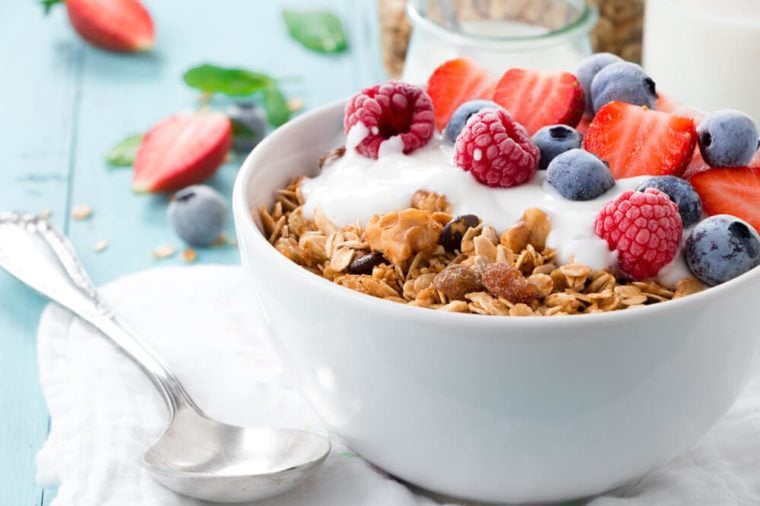
If breakfast is the most important meal of the day, then you better get it right. Picking a healthy, filling breakfast can set your day up for a chain of good food choices. Best of all, there’s a way to lose weight by adding to your morning meal instead of cutting foods out.
Berries don’t just help you sneak fresh produce into a likely carb-heavy breakfast, but they have some specific properties that can help you shed pounds. For one thing, they’re chock-full of fiber—you’ll get about a third of your daily need in just one cup of raspberries. Your body can’t break that fiber down, so it slows down digestion and keeps you fuller longer. “Raspberries in particular have the best ratio of carbohydrate to fiber. Of their 15 grams of carbohydrates per cup, eight are fiber,” registered dietitian Cynthia Sass, MPH, MA, RD, CSSD, writes for Self. Add that to your breakfast and you’ll stay full until lunch. Don’t miss these other incredible things that happen when you eat more fiber.
But that’s not all. A study in BMJ found that adults whose diets had the most flavonoids—a compound found in strawberries, blueberries, blackberries, and other produce—were less likely to gain weight during the 24-year study. Plus, some studies in mice and test tubes suggest ketones, a compound in raspberries that gives them their aroma, could boost the metabolism and speed up the breakdown of fat. Those studies used higher concentrations than you’d get from a bowl of berries, but they might still provide some benefit. If blueberries are more your thing, another study found that eating the fruit lowered insulin resistance—which makes it hard to lose weight—and reduced fat in obese rats. (Here are more incredible benefits of eating blueberries at breakfast.)
Even though their sweetness makes them feel like a treat, berries are low-calorie—you don’t have to worry about going overboard. Stir some into your yogurt, blend them into a smoothie, or have a cup on the side with your eggs. Even better: Add them to this breakfast that helps you burn calories all day. When they’re not in season, skip the overpriced cartons and stick with frozen—they’re just as nutritious. (Don’t miss these other myths about frozen food you need to stop believing.) No matter how you eat them, they’ll keep you full and help you shed that extra fat.
Don’t miss these other incredible health benefits of strawberries.
[Source: shefinds.com]
The post Adding This Food to Your Breakfast Could Help You Lose Weight appeared first on Reader's Digest.
from Diet & Weight Loss – Reader's Digest http://ift.tt/2nuzUaZ
Thursday, February 1, 2018
This 10-Second Daily Habit Could Be Your Secret Weapon for Weight Loss
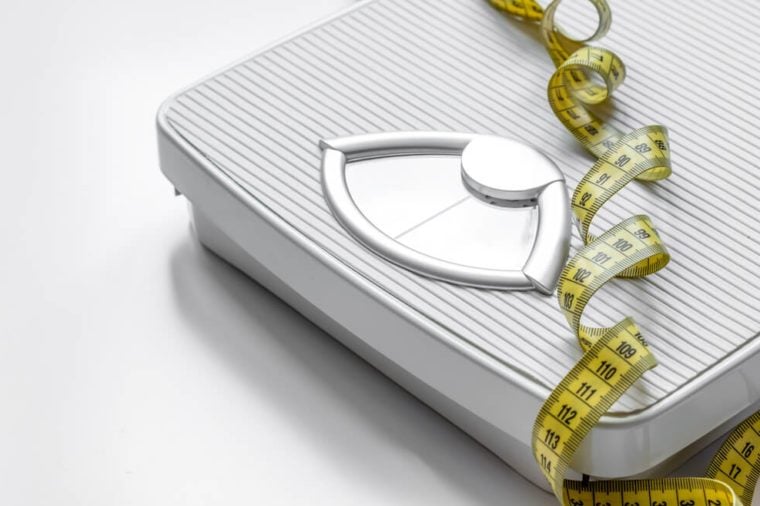
My body gains and loses weight pretty evenly, but when I suddenly found myself 30 pounds heavier, I knew I had to make a change. I started running and followed a modified Wheat Belly diet, but still made room for treats like ice cream and wine. I dropped almost 15 pounds fairly quickly, but while I was losing, I realized that one thing I was doing every morning was helping me reach my goal.
I was weighing myself. Every single day, first thing in the morning, before my coffee—and my busy schedule—could mess with my results.
Eventually, I started making excuses for why I couldn’t get on the scale. I had a big dinner. I didn’t get to the gym the day before and my results would be skewed. My pants didn’t feel different, so why should I get on?
Guess what? When I finally did step back on the scale, I found I had gained most of the weight back.
Researchers (and my friends!) have mixed feelings about getting on the scale on a daily basis. It’s easy for things like bowel movements, bloat, lack of sleep, and more to cause the scale to fluctuate a bit every day. However, I found that stepping on the scale every day—or at least every other day for consistency—has been the key to my continued weight loss success. In fact, a 2012 study proved that people who weigh themselves after losing weight have less of a chance of gaining it back.
While getting on the scale isn’t the best part of my morning, it allows me to make better choices throughout the day. If I notice the scale has bumped up significantly, I know to drink more water than usual and watch my portions. If it has stayed the same or gone down, I’m doing something right and will continue on that path.
But you can’t let numbers on a scale dictate your mood or attitude for the day, something I have been guilty of in the past. Understand that weight loss is a marathon, not a sprint, and keeping a positive attitude about it will yield even better results.
Don’t miss even more secrets from people who have maintained their weight loss.
The post This 10-Second Daily Habit Could Be Your Secret Weapon for Weight Loss appeared first on Reader's Digest.
from Diet & Weight Loss – Reader's Digest http://ift.tt/2GC1YBi
Subscribe to:
Posts (Atom)